Here’s a scenario worth sitting with.
A potential customer wants the best noise-cancelling headphones for travel. They don’t open Google. They go to TikTok and type “best travel headphones 2026.” Someone else needs a skincare routine for oily skin – straight to Instagram. A B2B buyer researching project management software? LinkedIn. A DIY homeowner planning a bathroom renovation? Pinterest.
Your Google ranking means nothing in any of those moments.
According to Rival IQ’s 2025 Social Media Industry Benchmark Report, brands that concentrate their presence on high-intent platforms like TikTok and Instagram see dramatically higher engagement returns than those spreading thinly across every channel. And with social platforms now functioning as full search engines – complete with query boxes, indexable text, and algorithm-ranked results – the brands winning in 2026 are the ones who figured this out early.
This is Social SEO. And no, it’s not about hashtags.
What Social SEO Actually Means
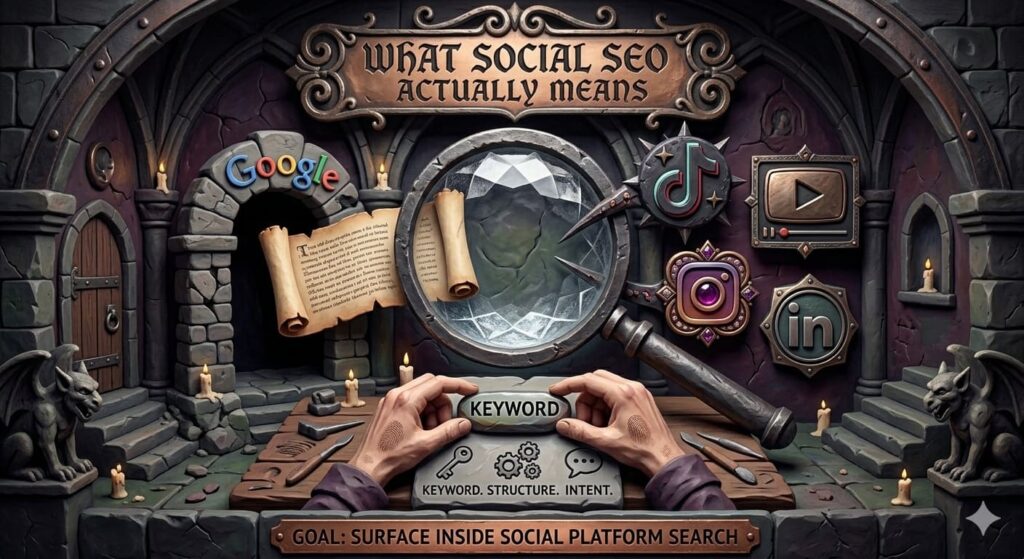
Social SEO is the practice of optimising your content to surface inside social platform search results – not just on Google. It means treating every caption, video title, pin description, and LinkedIn post the way you’d treat a page title: with deliberate keyword placement, clear structure, and an understanding of how real people phrase their questions.
The difference between social media marketing and Social SEO is intent. Feed content is pushed to users. Search content is pulled by users. The second category is higher intent by a significant margin – and most brands are barely touching it.
If you’ve read our piece on the Zero-Click Content Strategy, you already know that search engines are increasingly answering questions without sending traffic anywhere. Social SEO is what fills that gap – it puts your content inside the platforms where your audience is still actively clicking, watching, and buying.
Posting consistently is table stakes. Showing up when someone is actively searching? That’s the gap.
Why This Can’t Wait
Search interest for “Sephora makeup” surged 110% between June and November 2024 – almost entirely driven by TikTok-led discovery, not traditional Google search. That’s one brand in one vertical, but the pattern repeats across industries.
We’ve covered how AI is reshaping the broader search landscape in Search in 2026: Preparing for AI-Driven Search Engines. Social SEO is the on-the-ground execution of that shift – the practical answer to “where do I actually publish content if Google is no longer the only door?”
Prioritising advanced SEO and social media together – rather than treating them as separate budgets – is now table stakes for brands trying to sustain strong organic traffic and visibility. Teams still running separate social and SEO strategies in 2026 are funding two departments optimising for the same user in two different rooms.
Platform by Platform: What Actually Works
Every platform has its own search logic. A strategy that works on YouTube won’t directly translate to Pinterest. Here’s what matters on each one.
TikTok – The Search Engine Nobody Planned For
TikTok’s evolution from entertainment app to search engine happened without an official announcement, driven entirely by user behaviour. Brands are still catching up.
What makes TikTok’s search engine unusual is what it indexes. It doesn’t just read captions. TikTok can parse on-screen text, audio transcripts, and spoken words – so a keyword in your video script carries the same indexable weight as one in your caption. Every word you say out loud is searchable content.
What works on TikTok Search:
- Place your primary keyword in the first three seconds of spoken audio
- Add on-screen text overlays that contain the exact search phrase
- Write captions that lead with the keyword – direct and front-loaded, not clever
- Pin a keyword-rich comment underneath the video for additional indexable context
Brand example – Sephora: Sephora’s TikTok Incubator programme connects emerging creators directly with brands on the platform, generating authentic, keyword-natural content that mirrors how their audiences actually search – producing engagement rates of up to 9.43% on individual creator posts. The result is content that performs in search because it sounds like a real person answering a real question, not a brand writing a caption.
YouTube – The Dual-Index Advantage
YouTube is the second-largest search engine in the world, but its 2026 advantage is more specific: a well-optimised YouTube video can rank on YouTube’s own search, appear in Google’s standard results, surface in Google AI Overviews, and get cited by tools like Perplexity and ChatGPT. No other content format has that range.
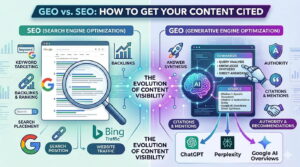
If you want to understand how that citation layer works, our deep-dive on GEO vs. SEO: How to Get Your Content Cited by ChatGPT, Perplexity, and Google AI Overviews is worth reading alongside this one. YouTube is one of the few content types that qualify for GEO and traditional SEO simultaneously.
YouTube videos embedded in blog posts and indexed across Google are increasingly cited by AI platforms, making the platform one of the highest-leverage places to build cross-surface search visibility in 2026.
What works on YouTube Search:
- Front-load your primary keyword in the title, within the first 60 characters
- Write descriptions as short articles – 200–300 words, naturally keyword-rich
- Use chapter timestamps with descriptive, keyword-led labels
- Upload a corrected transcript – YouTube’s auto-captions improve indexability but frequently misfire on industry terms
Brand example – Sephora: Sephora positions itself as an educator across YouTube and Instagram by publishing tutorials, expert guides, and trend reports – a strategy that drives 70% of customers to visit their website before making an in-store purchase. When search content educates first and sells second, it earns trust before intent converts.
Instagram – Indexability Is Catching Up Fast
Instagram’s search function has historically lagged behind TikTok’s. That’s changing. Sephora’s Instagram presence accounts for 47% of its total social following – about 22.7 million followers – making it the single largest surface in their social SEO strategy. And the infrastructure underneath it is getting more searchable by the month.
What works on Instagram Search:
- Place your primary keyword in your display name and bio – both fields are indexed by Instagram and Google
- Write captions that lead with a searchable phrase before the “more” cutoff
- Add alt text to every image post – it’s crawlable by both Instagram and Google’s systems
- Prioritise Reels over static posts for discoverability; Reels surface in Explore and keyword search results
What the data shows: Sephora’s influencer strategy through its Sephora Squad programme generated a 491% surge in social media impressions between 2022 and 2023, particularly on TikTok and Instagram. Creator-led content, when briefed around keyword themes rather than brand scripts, consistently outperforms polished brand posts in discovery. For more on how real-world brands are using AI and creator strategies together, see From Vision to Reality: Real World Examples of AI and Marketing.
Pinterest – Purchase Intent in a Search Box
Pinterest operates differently from every other platform here. Users arrive with a specific goal – planning a wedding, redesigning a room, building a wardrobe – and they search with that goal in mind. That makes Pinterest traffic some of the highest-purchase-intent traffic on any social platform.
Sephora’s digital strategy includes a strong Pinterest presence, leveraging visual-keyword combinations to drive product discovery among users in active planning and purchase research modes. For fashion, homewares, food, lifestyle, and retail brands, this is an underserved opportunity.
What works on Pinterest Search:
- Write pin titles like SEO meta titles: specific, keyword-first, 40–60 characters
- Pin descriptions should run 100–200 words with natural keyword usage throughout
- Organise boards around search terms people use, not your brand’s internal category names
- Use text overlays on images – Pinterest’s visual search reads and indexes them
LinkedIn, Reddit, and the Supporting Platforms
These three don’t need their own dedicated strategies in most cases. But they contribute meaningfully to your total Social SEO footprint – especially in B2B contexts or for brands where community discussions drive discovery.
LinkedIn: LinkedIn remains the primary discovery engine for B2B audiences researching SaaS tools, digital services, and professional expertise – and native long-form articles published on LinkedIn frequently compete with blog posts in Google search results. Optimise your company page’s “About” section with the keywords your buyers actually use, and write posts where the first line contains your target phrase – it’s the only part indexed in feed previews.
Reddit: Reddit threads often rank well in Google for niche queries, with both posts and comment sections indexed – meaning a genuinely helpful reply in a relevant subreddit can drive search visibility without owning any of the real estate. As we covered in The Future of SEO: What Happens If ChatGPT Replaces Search Engines?, public discussions on platforms like Reddit are increasingly used by AI tools to summarise brands. Don’t pitch. Answer questions. Your replies are crawlable.
X (formerly Twitter): Sephora stopped posting on X entirely by 2025 – a deliberate reallocation of resources toward platforms delivering measurable search and engagement returns. X can support discoverability through volume and linking, but for most brands, it’s a maintenance channel, not an SEO anchor.
The Social SEO Content Stack: One Topic, Every Platform
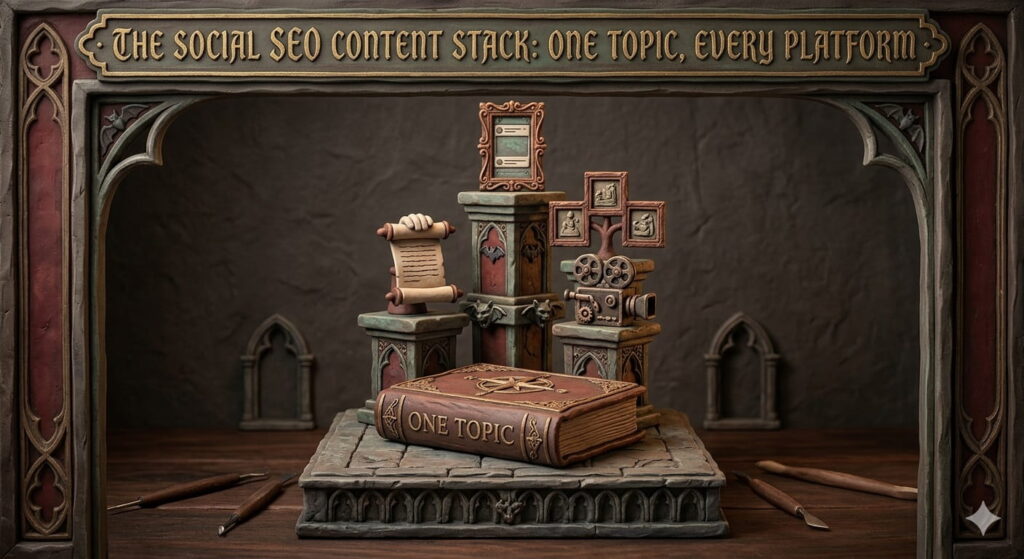
The biggest mistake in Social SEO isn’t poor optimisation on a single platform. It’s treating each platform as a separate content brief when they could all be serving the same keyword cluster.
For keyword research that works across both traditional and social search, Google Trends is still one of the most underused tools in any marketer’s stack – it tells you not just what people search, but when and where they search it. Pair it with platform-native search bars (TikTok’s autocomplete, YouTube’s suggest, Pinterest’s guided search), and you have a full keyword picture. If you need help producing content at scale across these formats, 5 Free AI Tools to Supercharge Your Content Creation is a practical starting point.
Here’s how a single well-researched topic deploys across platforms:
| Platform | Format | Role in the Stack |
|---|---|---|
| Blog / LinkedIn Article | Long-form written | Topic authority, Google indexing |
| YouTube | Explainer video | AI Overview citation, dual-index |
| TikTok / Instagram Reels | Short-form video | Discovery, awareness stage |
| Infographic/visual | Planning-intent, purchase stage | |
| Comment / reply | Community trust, niche search |
Sephora’s omnichannel approach – anchoring consistent messaging across Instagram, TikTok, YouTube, Pinterest, and email – drives nearly 30% of total sales through digital channels, with an integrated digital and in-store strategy delivering a 3.9x higher return on ad spend compared to single-channel campaigns.
That number isn’t about doing more. It’s about doing the same thing coherently, across multiple surfaces, where your audience is already searching.
Actionable Takeaways
- Audit every profile bio. Display name, username, and bio on every platform should contain a searchable keyword – not just your brand name. These fields are indexed. Most brands have wasted them.
- Write captions for search first, engagement second. Lead with the keyword phrase. You can be interesting after you’ve told the algorithm what the content is about.
- Treat YouTube as your SEO anchor. It’s the only format that indexes on Google, surfaces in AI Overviews, and gets cited by LLMs. Read our GEO vs. SEO guide to understand how to maximise that citation potential.
- Take Pinterest seriously if you’re in retail, lifestyle, food, or services. Users arrive with buying intent. The conversion potential is disproportionately high for how few brands actually optimise for it.
- Brief creators around keyword themes, not brand scripts. Sephora’s most discoverable content isn’t what the brand produced – it’s what creators made when given a topic and creative freedom. The search performance follows the authenticity.
- Stop running SEO and social as separate strategies. Our guide on how to use AI for a smarter SEO strategy walks through exactly how to unify keyword research across both disciplines – and AI-Powered Dynamic Customer Journeys shows what happens when that unified data feeds into personalisation.
- Measure what matters. Engagement rate, saves, and profile visits from search are your Social SEO KPIs – not just follower count. If you need a framework for connecting social performance to business outcomes, How to Use Analytics and Data-Driven Marketing is the right next read.
Google isn’t going anywhere. But it’s no longer the only room your audience searches in – and in some industries, it’s not even the first room they walk into. The brands with a Social SEO strategy aren’t waiting for the room to change. They’re already in all of them.